

Director & Chair of the Board · BG Kenya since 2001
“People said to me: Ria, this is too big, too complicated. But now it stands. And it works. And we are so grateful.”
She came as a volunteer for two weeks. She stayed for twenty-five years.
Ria Fennema was a primary school teacher in Friesland when she first visited Kenya in 2000. The visit was supposed to last two weeks. She returned to the Netherlands, as planned — but not for long. When the Ruiru orphanage faced closure in 2001, she made a decision that would define the rest of her life: she took over management and moved to Kenya permanently, bringing her commitment and, eventually, her family.
What followed was not a project. It was a vocation. Over the next two decades, Ria with the help of volunteers built what BG is today — not through a strategic plan, but through responding to each need as it appeared. The Malindi location opened because 15,000 children were orphaned on Kenya’s coast and no one else was addressing it adequately. The Ruiru High School was built because BG children were struggling in large impersonal boarding schools far from home. The Lighthouse Village was created because an institution, however good, is still not a family.
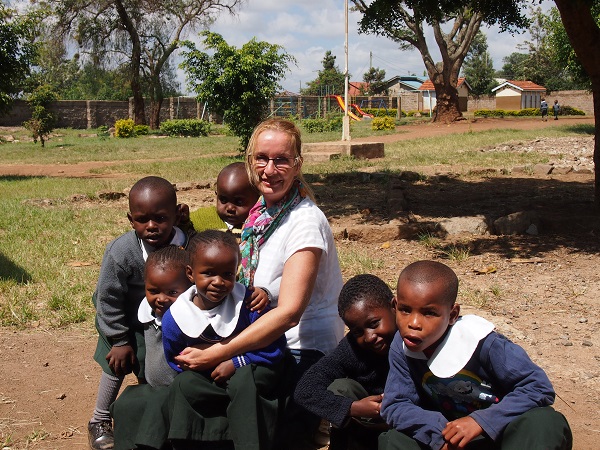
Each of those decisions was made in response to reality, not ambition. And each time, Ria was told it was too much — too big, too complicated, too expensive. Each time, it turned out to be necessary. That pattern — refusing to accept that something is impossible because it has not yet been done — is what distinguishes BG from organisations that stop when the work gets hard.
Today she and Fester Medendorp, who joined in 2004, have two children who grew up in Kenya. That is the most direct statement of what kind of commitment they made in 2001. Not temporary. Not rotational. Permanent. And the proof of what permanent commitment produces is visible in the outcomes: 98% KCSE pass rate, 75+ alumni in university or careers, and some of those alumni now sponsoring the next generation themselves.
She publishes regular newsletters from the field. Sponsors consistently describe them as the most honest, grounding communications they receive from any organisation they support — because Ria writes about what is hard alongside what is working, and she has never pretended that this is straightforward work.
2001
Under her leadership
3
Locations opened — Ruiru, Malindi, Nyamira
Each one opened in response to a specific crisis that existing provision was failing to address.
Other Kenyan child welfare organisations visit to study and replicate the model. She was told it was too ambitious.
Fester joined in 2004 and has managed BG’s operational, construction, and infrastructure work ever since. The Ruiru classrooms. The Nyamira residential buildings. The Lighthouse Village homes in Malindi. The physical infrastructure of everything BG has built is his work — if less visible in the storytelling than Ria’s, no less essential to the outcomes.
Together, they represent the kind of leadership that BG’s outcomes require: not remote governance, but people on the ground, for the long term, who know the children by name and the buildings by the problems they had to solve to erect them.
From the field
Direct field reports — what is working, what is hard, and what the children are doing. No polish, no spin. Sponsors describe it as the most grounding communication they receive from any organisation they support.
Support the Lighthouse Village
€40/month sponsors one child in full — school fees, meals, healthcare, and accommodation. Every euro reaches Kenya. Tax-deductible for Netherlands donors under ANBI status.